
Food traceability: duties, batches, use-by dates and records to retain
During an inspection or product recall, a food business must be able to retrieve relevant origin and batch information. This guide separates general regulatory duties from the functions provided by a digital tool.
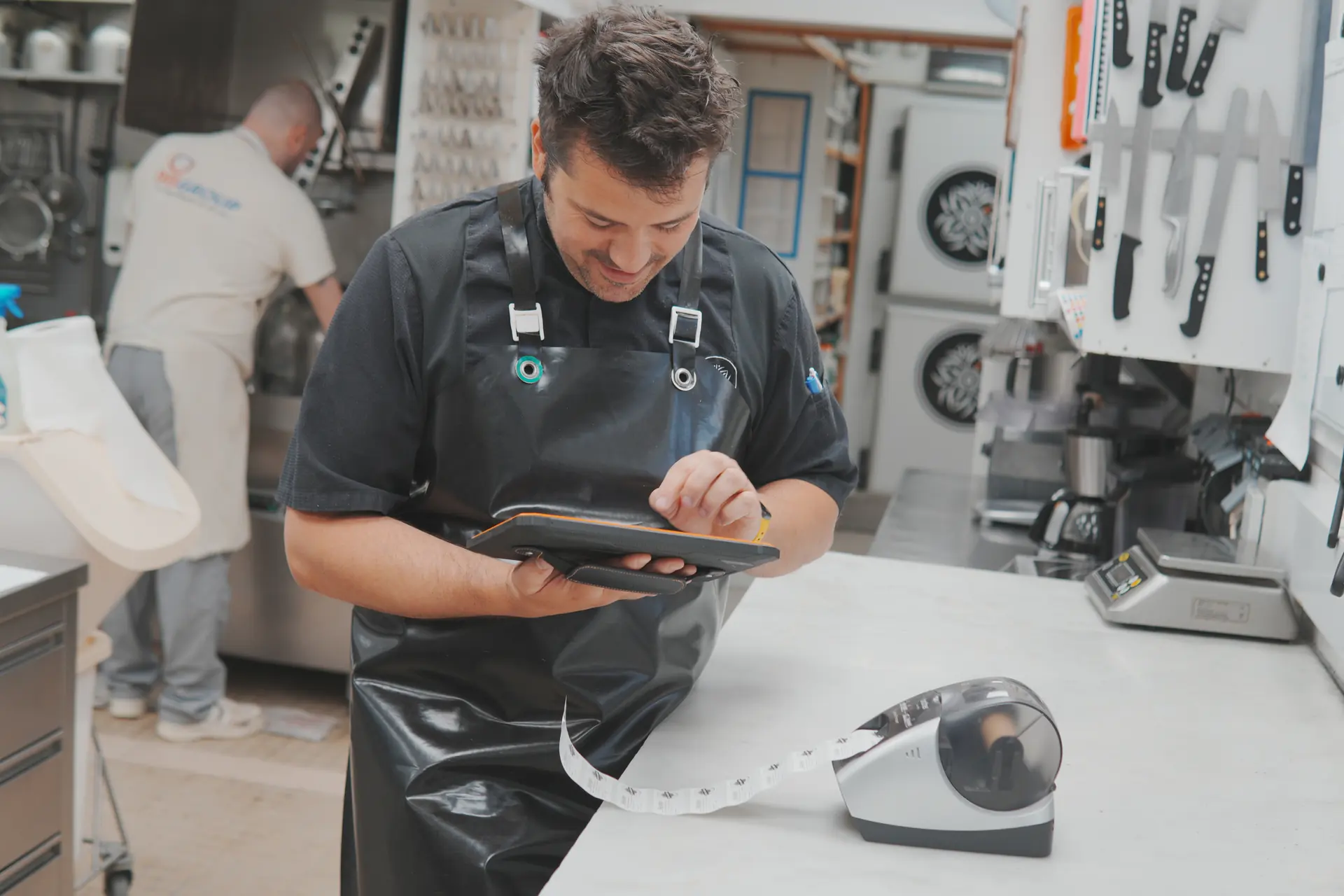
In food service and food production, traceability is not optional. Every operator must be able to say where food came from and, for many activities, where it went. The question is therefore not “should we trace it?” but “which tool should we use?”. Paper files work while nothing is urgent. Their limits become clear when an inspector asks for a specific record or a product recall requires a batch to be found quickly.
A food traceability app can structure recorded batches, dates, labels, and evidence. It does not replace the operator’s duties or a withdrawal and recall procedure. This guide explains what the law requires and what Traceo currently covers.
What the law actually requires
EU Regulation 178/2002 sets out the general principle: every food business operator must be able to identify the businesses that supplied its food and those to which it supplied products. This is known as the “one step back, one step forward” principle. For a restaurant serving final consumers directly, the main concern is upstream traceability: knowing which supplier and, wherever possible, which batch each food came from.
Two points are often misunderstood:
- No particular tool is required. The law defines the result, not the medium. A well-maintained paper file can comply; poorly completed software cannot.
- Speed matters. During a food safety alert, authorities expect information to be available quickly. This is where the difference between paper and digital records becomes tangible.
These basic duties sit alongside the requirements of the establishment’s food safety management plan: retain labels or references for products used, apply justified shelf lives after opening or production, and be able to present this evidence during an official inspection.
Why paper files eventually become expensive
Searching can be difficult
Finding the delivery note for one batch in a paper archive requires reviewing the available files. During service, that check may be postponed or carried out from memory.
Information becomes scattered
The carton label goes in the bin, the opening date is written on the tub in marker and the delivery note is in the office. The link between a product in the cold room and its original batch breaks in several places.
Working practices diverge
Every employee develops their own habits: abbreviations, date formats and omitted fields. Across several sites, each location ends up with its own method, which is impossible to harmonise without a common framework.
Evidence is fragile
A folder can be incomplete, illegible or simply missing on inspection day. Time-stamped, structured and backed-up records are easier to present and substantiate.
What a food traceability app should cover
Goods receipt
Traceability starts at delivery: supplier, products, batches, temperatures on receipt and packaging condition. If the application can capture delivery notes and labels with a camera, data entry becomes a check rather than a chore. See how Traceo handles goods receipt.
Batches and use-by dates
After opening or processing, the product must remain identifiable: original batch, opening date and use-by or secondary use-by date according to the food safety plan. This is the link most often broken by paper processes because known information has to be copied again.
Internal labelling
A printed label shows the product name, batch, dates and allergens in a consistent, legible format. When connected to traceability data, it avoids duplicate entry and ambiguous handwriting. Read our complete guide to digital use-by date labelling.
Evidence search and export
The decisive criterion is whether the tool lets the team consult information actually recorded for products and batches and present retained evidence. For suppliers, quantities, destinations, and recalls, separately verify that your procedures and chosen tool cover the applicable requirements.
What Traceo traceability currently covers
The general duties to identify suppliers and manage a withdrawal or recall belong to the food business. Traceo’s label reading does not automatically link a photo to a supplier, preparation, or recall.
1. The team takes one to three label photos
The user photographs the useful sides of the product label in the traceability workflow.
2. Traceo proposes recognized fields
Traceo can propose the product name, batch, use-by or best-before date and, when visible or relevant, a possible secondary use-by date.
3. The user reviews and corrects the fields
Proposed fields are not saved without review. The opening date and operator come from the action recorded in Traceo, not from the image.
4. Quick Print reuses validated data
From an existing product or traceability record, the team reviews or edits the product and batch, selects the label type, dates, and quantity, then prints the configured fields. See the Traceo label printer.
Restaurants, bakeries and caterers: the same need at different volumes
In a restaurant, traceability mainly concerns daily deliveries and products opened during preparation. In a bakery or patisserie, the number of ingredients and production runs makes label printing and batch tracking especially useful. For caterers and central kitchens, quantities, destinations and secondary use-by dates play a larger role, and multi-site management quickly becomes essential: the same products and rules, with data available from head office.
How to choose well in 2026
- Entry speed: a complete delivery check should happen while goods are being received, not after service.
- Document recognition: photographing a delivery note or label should pre-fill fields, subject to human validation.
- Connection to labelling: traceability data should feed internal labels directly.
- Search: actually test “find batch X from supplier Y” before committing.
- Multi-site operation: harmonised rules and products, while preserving each site’s specific needs.
- Included hardware: a kitchen-suitable tablet and printer avoid improvised consumer equipment.
- Total price: compare the subscription, hardware and support, not just the advertised monthly fee. Our 2026 HACCP app comparison examines the main offers, while Traceo pricing is detailed on the pricing page.
Digital tools do not replace discipline: they make it sustainable
An application does not make an establishment compliant on its own. Shelf lives must still be justified, teams trained and procedures followed. What digital tools change is the workload: known information is no longer copied, formats remain consistent and evidence is available when needed.
Traceo brings traceability entry, temperature records, cleaning tasks, receptions, and labelling into the same application. Each item remains subject to team review. Request a free demonstration.